Wednesday, 7 May 2014

On Being Somewhere In-Between...


"Those triumphalist celebrations of fluidity always overlook the fact that being unfixed, mobile, in-between, can distress as much as it liberates. So one's sense of class identity is uncertain, torn and oscillating- caught on a cultural cusp" (Medhurst, in Munt, 2000: 20). 
One of the greatest moments of my life to date was the day I found out that I'd received funding for my PhD. The opportunity to work on a project of my choosing, pursue personal and professional development, enjoy three years of financial security; no words can describe the high I felt in that moment of reading the acceptance letter from my funder. 

What I didn't bank on however, was how 'doing' a PhD would impact upon my sense of self-hood a year down the line. In that moment, of course, the last thing I was thinking about was what exactly I was leaving behind. 

Before I came to university I was a chef. I went to college at 18, gained the vocational qualifications I needed and grafted kitchens for 5 years full time before realising that I probably couldn't have picked a worse industry, as a woman, to attempt to progress in. 

It took me a while, but eventually I made into university and completed my undergraduate and Masters degrees.

Like a lot of 'non-traditional' or working class students, I never really felt like university was for 'people like me', but that I had thought those thoughts in the first place annoyed me significantly enough to gain the grit required to bash through, if only just spite myself and "see what might happen".  

Last September, I walked out the kitchen for the last time. I was a part-time baker/cake maker for the duration of my BA and MA studies,and news of my funding meant that finally, I could leave behind the industry that I had found no longer sustained my appetite for self development. 

I don't regret leaving, and I definitely don't miss sweating for a wage barely shy of minimum wage, but in my leaving, in closing that chapter of my life to make room for my new academic pursuits, I was also to find that I had left, or lost perhaps, a secure sense purpose and of who I was.

The transition into higher education is often painful for students, and especially for non-traditional students(Burns and Sinfield, 2004). The feelings of shame, fear and inadequacy provoked by this movement through a system of higher education that is argued by some to ignore cultural inequalities  and exacerbate myths of meritocracy and classlessness, are well documented (Tett, 2000, Leathwood, 2003, Sinfield, 2003). 

But what about the shift up from structured postgraduate programmes to PhD study? Is it to be presumed that such feelings abate the longer we are in this system? Are we expected simply to 'get over it' by the time we reach this level? 

A pivotal aspect of my identity, that which had in fact driven me to endure my anxieties about being at university and complete my degrees, rested on my perceptions of my ability to 'graft'. I was a 'grafter'; a 'hard' worker; a 'good' worker; a 'real' worker. I knew what it was like 'out there', beyond the ivory tower. My participation on a taught postgraduate MA never threatened this identity, partly because I still had a job in the outside world, and otherwise because the structure of the programme suited my work style. With short bursts of work across the course of the year, it was much like shift work, when the tasks were over, they were over. You could close the door on them and leave them behind. 

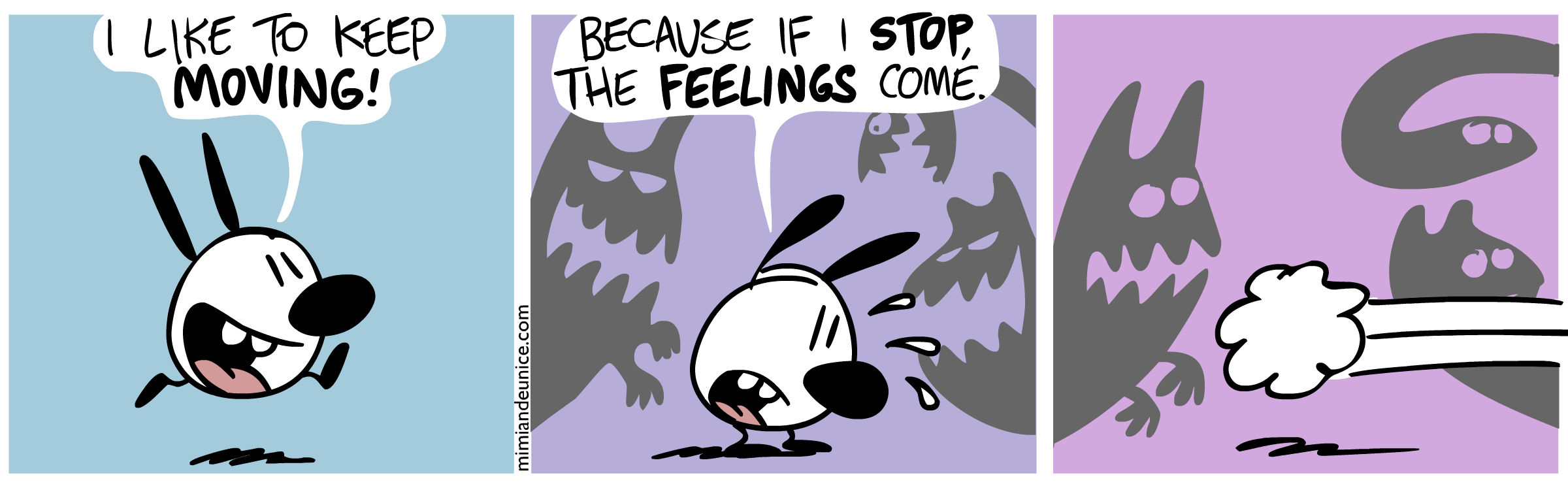
Doing a PhD is like nothing I have ever experienced, I say this all the time! I am well and truly out of my comfort zone. My 'authenticity'- my sense of self feels threatened, as I 'oscillate', to use Medhurst's words, between who or what I thought I was and what I now must try to become. I mourn the loss of an identity or way of being that I had mastered. I fear that I may fail to successfully 'become' 'a PhD student'- in all their seamless, articulate, organised, quietly genius glory. I will be uncovered as an imposter, a fraud, a mistake. 

I am no longer there nor have I yet found myself here. I have not let go but must reach ahead in order to become something new. I am in-between, ambiguous. I am abject.

"Abjection is above all ambiguity. Because, while releasing a hold, it does not cut off the subject from what threatens it- on the contrary, abjection acknowledges it to be in perpetual danger"(Kristeva,1982: 9-10).  

NB. Am I saying academics aren't grafters? Am I saying they aren't 'real' people? Am I saying they don't have to try or struggle? Of course not. My feelings of inadequacy, of fear and of uncertainty rest precisely on the ways in which I have quite irrationally interpreted the talents of 'others' as 'innate'!

I should know better, but to attempt a sociological analysis of your self-hood...I should think I might be more objective, if I wasn't so attached to myself. 

Am I middle class yet? ;)     

Kath
x


Monday, 14 April 2014

Pals: The Importance of Friends

You've heard it said before: doing a PhD can be a lonely business. 


Making a few pals along the way is really important: 

a) to ensure that you don't turn into one of those 'eccentric' academics with less than perfect social skills and b) to keep you sane during your PhD.


Although it can be pretty nerve racking when you first start, taking other postgrads up on their offers for coffee or a pint is all it takes. Failing that, just talking to people in your office is just as good.  

I'm the first person to cringe at the thought of awkward silences and nervous eye contact, but it doesn't have to be that way. Remember what you have in common- doing a PhD. 

I've learned loads about what's involved in doing a PhD, from what to expect from the first Annual Progress Review to how to write an academic book review for a journal. Also:

THEY TELL YOU THINGS YOUR SUPERVISORS WON'T/CAN'T/SHOULDN'T

Some of the best advice I've been given this year was to start saving for a fourth year, even if you don't end up needing it. Why? Because despite how confident you are with that Gant chart you made during the submissions period, a lot of projects run over three years, and if your sponsored, that's when your money is going to dry up. 

I don't want to call this networking, because for me at least, that's what you do with other students and lecturers at more formal events and conferences. This is about trying to make a pal or two who you can turn to for advice and support, who you can help out in return, and maybe who'll also just let you rant at them when things get a bit wild.

Of course, sometimes, these friendships do turn into opportunities. Currently, thanks to a well connected pal, a group of friends and I are working as a team of Research Assistants on an arts and humanities project in our local area. Working with your mates, amazing. 

I've made some good pals last year and this year, and seriously, I can't imagine doing this without them. 

Kath
x

Friday, 28 March 2014

Linkedin: Developing Your Professional Profile

If anyone had asked me what the deal was with Linkedin before Monday, I would have been like:


It's been around since 2003, but I didn't join until 2012, kind of around the time when it was gaining a fair bit of hype online. 'Get Linkedin or Get Left Out' they said, so I was like O.K.
I'll admit straight off the bat that I'm not the most media savvy person the world has ever seen. I recently experienced something of an online identity crisis and tried to join Tumblr, only to realise that a) I don't know what it is b) I don't know what it's supposed to be used for and c) I've far surpassed the age demographic of the majority of the site's users.


Needless to say, whilst Linkedin was clearly always going to be of more use to me than Tumblr, I always ended up neglecting my profile because I didn't really feel like I knew what I was doing.

On Monday Newcastle University held an interactive workshop in collaboration with the London Alumni Branch to help students get to grips with Linkedin. At the 'LinkedIn Lab' we were given the chance to ask a 'Lab Doctor' questions about our profiles and how to improve them. They also offered a professional photography service for those looking to gain a more professional looking profile picture. I bottled out of this because I hate getting my photo taken (as if the cat face thumbnail doesn't make this obvious) but I wish I hadn't. Talks were also given by London Alumni Branch chairman Sam Waterfall and Linkedin 'guru' Charles Hardy

Since starting this blog and using twitter for more academic and professional purposes, the benefits of social networking platforms for sharing ideas and networking with other students and academics have become more obvious. Hence, progression into Linkedin made sense. Anyway, as I found this session so useful, I thought I'd share with you some of the top tips I took away from the Linkedin Lab.

1.Ensure your 'headline' is attention grabbing and precise. Writing 'student at whatever university' is too vague, and won't help you to stand out. Think keywords and include searchable terms to increase your visibility. 

2. Your 'summary' in Charles Hardy's words, is your 'elevator pitch'. There's a 2000 character allowance and he recommends you use it to tell your professional story. Note the word 'story' here. Go first person narrative all the way. 

3. Complete your profile. Users with 100% completed profiles are 40 times more likely to gain opportunities through Linkedin.

4.Giver's gain. That's what they told us. Endorse your contact's skills and write recommendations for them. They should return the favour, helping you to increase your professional kudos. 

5. If your curious about what your professional profile picture says about you, try getting it rated by others at PhotoFeeler but be warned, this is not the place for those whose egos bruise easily!

6. Not looking for job opportunities right now? Doesn't matter. Start now, be future focused and build your professional network whilst you study. When the time comes to look for jobs, you'll already be well connected.

My profile is still 'under construction' as I continue to learn more about how to improve it, but if you would like to view my profile, follow this link!


Kath 
x


Tuesday, 18 March 2014

It's Emotional Work

One of my supervisors gave me a copy of 'Dancing and Wrestling with Scholarship' by Professor Les Back the other day. She kindly gave me a pile of around 20 to hand out around the office, but as they were headed with a personal message that read:
 'This was really useful for me when I was doing my PhD, I thought it would come in handy for you'
 I knew the other 19 copies were there to make me feel a little less like I was being bureaucratically flagged as 'on the edge'. Which was appreciated. 


This article really got me thinking about the emotion work behind doing a PhD. Those further ahead of me may laugh at this point. Of course I'm only in first year, I know I have barely dipped my toe into the incessant pool of desperation, exhaustion and disillusionment that awaits me, but like all first years, I have just been thrown in to a completely new way of working, and I'm doing my best to make sense of it all.
'When your PhD is going well it is a good dancing partner. When it is going badly it feels like you are being thrown around some intellectual equivalent of a wrestling match'.
How true is this? 

I don't know whether I should be worried at this stage that I am a little too invested in my PhD (is this even possible?), but, 7 months in, I have already experienced great intellectual highs that make you feel like you could in fact change the world (!) and the crashing lows that, on the flip side, make you to feel as though you might as well set fire to your year's work and get down the queue at the nearest job centre.   

It's like nothing I have experienced before. I have had jobs were I have worked independently, I have always cared about whatever job I have been in, but there is something I find far more personal about handing over your ideas and aspirations for review in a supervisor meeting. 

My feedback is always productive and I trust my supervisors unequivocally, but there is always that pinch: 
'A moment of 'pinch' between what one does feel and what one wants to feel (or what one thinks they ought to feel). In response, the individual may try to eliminate the pinch by working on feeling' (Arlie Hochschild 1979).

I really feel like there is a significant amount of emotional labour that has to go into being a PhD student. We have to continuously perform a series of personal management acts for self preservation, to allow us to cope with the pressures and strains, the unforeseen circumstances and the knocks to our confidence.  

I haven't mastered the techniques for successful emotion work yet, but I'm told that eventually, I'll develop a thick skin. 


Kath
x


Monday, 10 March 2014

Interrogating Your Own PhD Proposal

I'm a sponsored student. This means that my PhD proposal has been scrutinised at a variety of different levels: by my supervisors, my funder and by the admissions panel of my institution. Guess what though? This does not mean that my research is'good to go'. 

It seems rather obvious now, but my experience as a newbie PhD researcher has taught me one key thing about the nature of social research. It is an entirely ITERATIVE PROCESS. Yes, of course all of the 'Writing Effective Research Proposals' books I read at the very start did warn me of this, but there's nothing quite like experience to really reaffirm the truth of those statements you stumble upon whilst browsing through the yellowing and slightly moth eaten texts the library houses. Indeed, sometimes you have to go backwards, in order to move forwards.


In preparation for my Annual Progress Review in May, I have been continuously revisiting and reworking my research plan in the hope that I can produce a thing of out right beauty before the panel. As you may already be aware, I have a rather startling image of what APR will be like, and so, in light of this, I am endeavouring to be as prepared as humanly possible for any questions or concerns raised as by my research. The faculty training session I attended on what to expect from APR did make the entire process seem like it would resemble a traumatising interrogation scene. 
'What is your justification for the number of participants you have outlined? 20- 25, this is a specific figure, why have you forecast this quantity? What will you endeavour to do to gain this amount? What will happen if you do not achieve this amount? Have you comprised a recruitment strategy Plan B? What are the consequences of said Plan B for the outcomes of your research? Will your aims be compromised?'
...(trying not to hyper ventilate)...so many questions about just one aspect of my design...and breathe...

I have responded to this in the following way: 
Prior self interrogation.

I am aware that this may seem slightly masochistic, but I have now annotated my research plan with a rather extensive list of possible queries, questions and concerns raised by my research, and I am now in the process of writing well-researched and rigorous answers to said questions, and formulating Plan Bs, Cs and (potentially even) Ds simultaneously.

It's a little bit like pulling apart a cake you carefully constructed and very nicely decorated yourself, that or its like, well..I haven't actually resorted to shining lamps in my own eyes and dunking my head in the bath YET. 

I probably could have titled this post 'Deconstructing your PhD Proposal', but it really doesn't have the air of violence and evasiveness I associate with APR...

Kath
x

Thursday, 6 March 2014

Anticipating Annual Progress Review

Yesterday we had a faculty training session on what to expect from my first ever Annual Progress Review. After attending this session, I believe I have a clear picture of what APR will feel like for a new first year.


I also have a good idea about what the panel will look like.


How I will deal with professional criticism.


And how I will move forward afterwards.


I've got the fear. 

Whilst the session did include some reassuring accounts from second and third year students about their experiences of APR, I feel they were at the same time gaining a reasonable hourly rate for their time and so probably couldn't be too scathing about the process. There's that, and the fact that the Faculty Dean of Research was present. 


I do imagine it to be like Evie's interrogation process in V for Vendetta. This is the image that replays in my mind over and over. 


Can't wait!


Sunday, 2 March 2014

Time (Mis) Management...

I used to think I had pretty strong time management skills. I worked two jobs whilst doing my Masters last year. And, despite 20 hours a week being signed straight over to part-time graft, I still finished the course on time, and left with the grade I wanted. 

I don't know what the hell happens when you start a PhD. It's like everything you once took for granted and just did isn't enough any more. Life literally runs away from you. 
Seriously, prior to this year the words 'time management' as I understood them, broadly referred to sticking your head down and getting things done. I didn't really think through the hows and whys of it. I just did it. 

That was all well and good when we were dealing with monthly assignments of no longer than 3000 words a piece. Now that we're grappling with what feels like to me- the brutally naive, permanently terrified and (probably) over-dramatic first year that I am- an infinite, sprawling and continuously amalgamating jelly like mass of work that is my research project. 

You don't know it's happening until it's too late. You tell yourself it's all going to be ok. Then it hits you. Like a sledgehammer to the jaw. There's so much to do and you thought you would just do it and that it would all be fine but now your drowning under a sea of deadlines, 'to do' lists and general expectation...


Jeez. Doing a PhD forces you to be a responsible, organised and rational human being. 

It makes you buy a diary. 

It makes you write lists.

It makes you willingly Google the words 'Personal Development Plan'.

I've changed.

Kath